 Skip to content
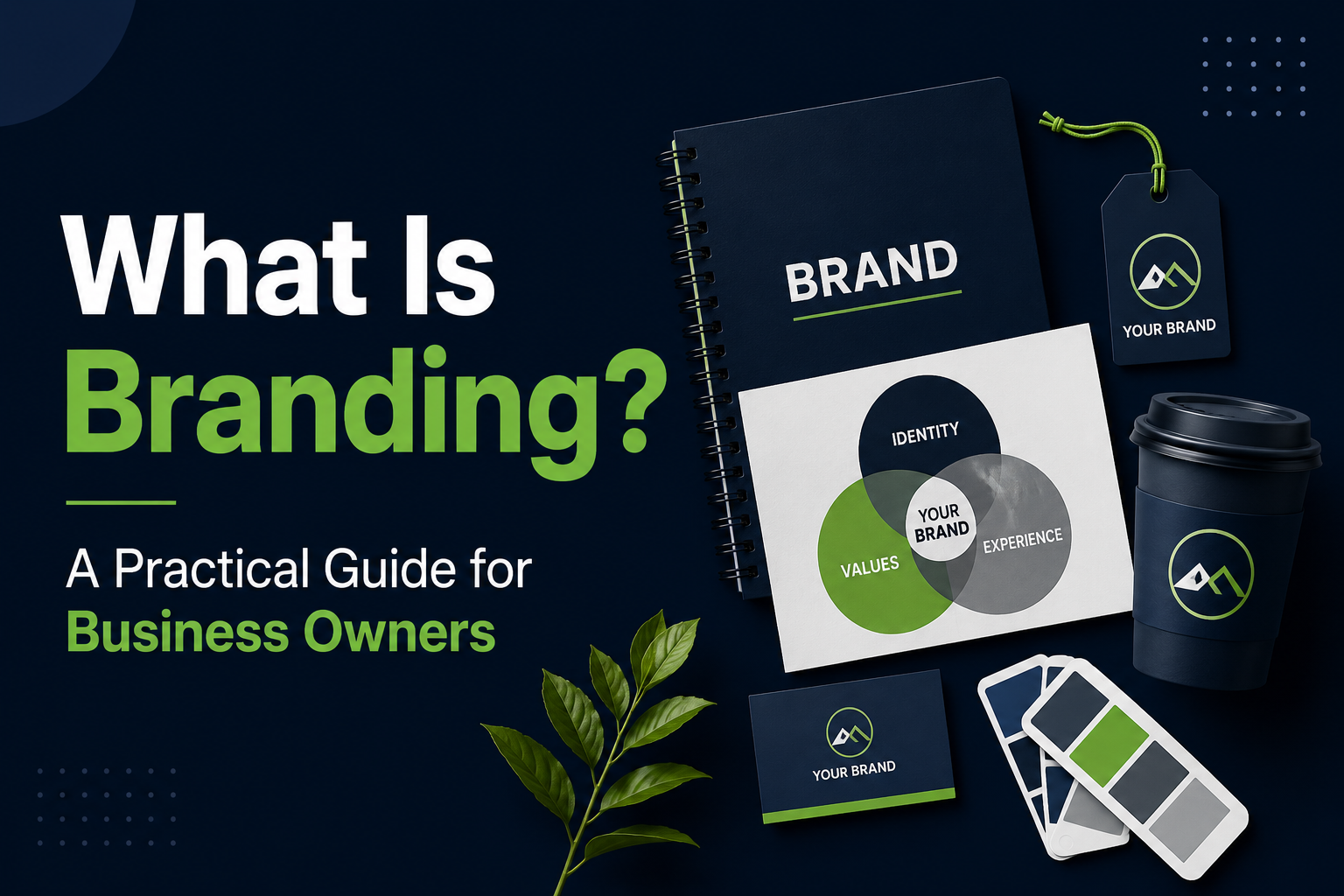
Every business has a brand; what is branding?
The question is whether that brand is working for you or against you.
Many business owners assume branding starts with a logo and ends with a website. They invest in visual design, launch social media pages, and print business cards, believing they’ve successfully built a brand.
Then they wonder why customers still choose competitors.
The reality is that branding goes much deeper than visual identity.
Long before a customer buys from your business, they form opinions about it. They judge your professionalism, credibility, expertise, reliability, and value. Those perceptions influence whether they trust you enough to make a purchase.
That perception is your brand.
A strong brand can help you attract better customers, charge higher prices, generate referrals, and build long-term loyalty. A weak brand can make even the best products or services difficult to sell.
For business owners looking to grow sustainably, branding is not a creative exercise. It is a business strategy.
What Is Branding?
Branding is the process of intentionally shaping how people perceive your business.
It is the combination of your reputation, messaging, visual identity, customer experience, and market positioning.
In simple terms, branding is what people think about your business when they hear your name.
Many people define branding through visual elements such as logos, colors, and typography. While those assets play an important role, they are only part of a much larger picture.
Your brand is built through every interaction a customer has with your business, including:
- Your website
- Your social media presence
- Your customer service
- Your marketing campaigns
- Your pricing strategy
- Your sales process
- Your company values
- Customer reviews and testimonials
Together, these touchpoints create an impression in the minds of your audience.
That impression ultimately influences buying decisions.
Why Branding Matters More Than Ever
Today’s customers have more choices than ever before.
Whether you operate a consulting firm, construction company, software business, retail store, or professional service, your competitors are only a few clicks away.
When products and services appear similar, people often make decisions based on trust.
Branding helps create that trust.
Research consistently shows that customers are more likely to buy from businesses they recognize and perceive as credible.
A strong brand helps answer important questions before a prospect even contacts you:
- Can I trust this business?
- Do they understand my challenges?
- Are they experienced?
- Are they professional?
- Will they deliver what they promise?
The faster your brand answers those questions, the easier it becomes to attract and convert customers.
The Difference Between Branding and Marketing
One of the most common misconceptions among business owners is that branding and marketing are the same thing.
They are closely related, but they serve different purposes.
Marketing gets attention.
Branding creates meaning.
Marketing is how you attract potential customers.
Branding is how you influence what they think and feel once they discover you.
Think of it this way:
You can run an advertisement that reaches one million people.
However, if your brand appears inconsistent, unprofessional, or unclear, those impressions may never turn into sales.
On the other hand, a strong brand can make every marketing activity more effective because people already trust what they see.
Marketing creates awareness.
Branding creates preference.
Businesses need both, but branding often determines whether marketing efforts succeed or fail.
The Core Components of a Strong Brand
Strong brands are not built by accident.
They are intentionally developed around several key components.
Brand Purpose
Your purpose explains why your business exists beyond making money.
Customers increasingly want to support businesses that stand for something meaningful.
A clear purpose creates emotional connection and differentiation.
Brand Positioning
Positioning defines how your business is perceived relative to competitors.
It answers questions such as:
- What makes you different?
- Who do you serve?
- Why should customers choose you?
Without clear positioning, businesses often become interchangeable in the eyes of customers.
Brand Messaging
Messaging is the language you use to communicate your value.
It includes:
- Taglines
- Website copy
- Sales messaging
- Marketing campaigns
- Social media content
Strong messaging communicates benefits clearly and consistently.
Visual Identity
Visual identity includes:
- Logo design
- Brand colors
- Typography
- Photography style
- Graphic elements
These assets help customers recognize and remember your business.
Customer Experience
Your brand is reinforced or weakened every time someone interacts with your company.
Customer experience includes:
- Response times
- Service quality
- Communication
- Delivery process
- After-sales support
The strongest brands consistently deliver positive experiences.
Common Branding Mistakes Business Owners Make
Many businesses unknowingly damage their brand through avoidable mistakes.
Focusing Only on the Logo
A logo alone cannot create trust.
Without clear positioning, messaging, and customer experience, even the best logo will have limited impact.
Inconsistent Communication
Using different messages across websites, social media platforms, and marketing materials creates confusion.
Consistency builds familiarity.
Familiarity builds trust.
Trying to Appeal to Everyone
Businesses that attempt to serve everyone often struggle to resonate with anyone.
Strong brands understand exactly who they serve and communicate directly to that audience.
Copying Competitors
Following competitors too closely makes differentiation impossible.
Effective branding highlights what makes your business unique rather than replicating what others are already doing.
How Strong Branding Drives Business Growth
Branding directly influences business performance.
When customers trust your brand, they are more likely to:
- Choose your business over competitors
- Purchase higher-value services
- Recommend your business to others
- Remain loyal over time
- Engage with your content and marketing
As a result, strong brands often experience lower customer acquisition costs and higher customer lifetime value.
This is why branding should be viewed as a strategic investment rather than a design expense.
The businesses that achieve sustainable growth are often those that consistently invest in how they are perceived.
Signs Your Business Needs Better Branding
You may need to strengthen your branding if:
- Prospects frequently compare you based solely on price
- Customers struggle to explain what makes your business different
- Your marketing generates attention but few conversions
- Your messaging feels inconsistent
- Your business lacks recognition within your industry
- You attract the wrong types of customers
These challenges often indicate a branding problem rather than a marketing problem.
Final Thoughts
Branding is not about creating a prettier logo or choosing better colors.
It is about shaping perception.
The most successful businesses understand that branding influences trust, credibility, customer loyalty, and ultimately revenue.
When customers consistently associate your business with expertise, reliability, and value, marketing becomes easier, referrals become more frequent, and growth becomes more sustainable.
For business owners, branding is not simply how your company looks.
It is how your company is remembered.
Next Read: Explore our complete guide to Branding Explained: What It Is, Why It Matters, and How to Build a Strong Brand to learn how branding design, personal branding, employer branding, and brand strategy work together to drive business growth.
